


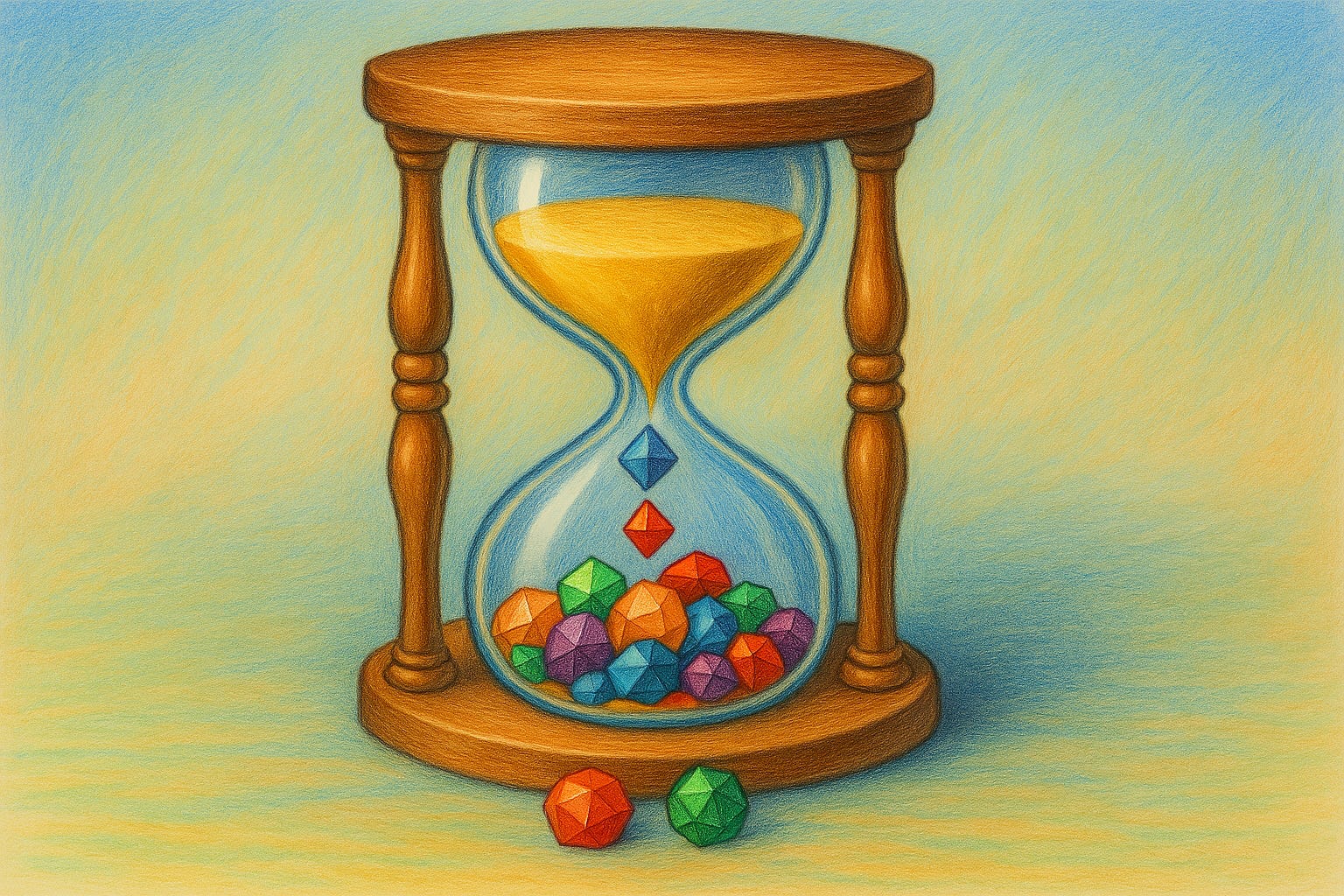
When I started at Microsoft, I was an import straight out of college, as were probably 90% of the people that I worked with on a daily basis. At that time, and for us imports, Microsoft life felt like a natural continuation of our college life. Our routine was: wake up, go to work, come home, go to bed. The entire day was spent with our Microsoft family. We didn't spend all of that time behind the desk. We worked together and we played together. When dinners weren't provided by Microsoft, we went to dinner together. We went to bars. We went skiing, skating, biking, and hiking. We went to sporting events, to movies, to concerts. We played Whirlyball a lot. We had weekend parties. We got hooked on Wolfenstein 3D, and then Doom, and then Descent.
I have a hard time putting into words how incredible and unique my first five years at Microsoft were. I made long lasting friendships (including one extra special friendship … with Charu, my wife). I learned so much that it felt like a more intense version of college. The environment completely embodied the phrase, "work hard, play hard." The key at this stage was, we had access to the full 24 hours of the day. When a big "play" event came along, we gave that more time. When a big "work" demand arose, we gave that more time. There was no shortage of time, so we didn't pay too much attention to how we were spending it.
Then I started a side business. Then Charu and I got married. Then Charu started her own business. Then I became a first level manager. Then we had kids. Then I became a second level manager.
Time feels infinite, until the moment you realize it's not. And then you begin to see the clock in a completely different way: a very valuable tool in your long game1.
One and Done
The phrase "one and done" typically refers to an experience that you've have once and that you don't plan on trying again because the pleasure/pain ratio was too low. But I have repurposed this phrase for a more positive experience. "One and done" has become my mantra for single-tasking. This phrase highlights the primary motivation for single-tasking, which is to give your complete attention to the one task in front of you so that you can call it done and move on. Randy Pausch gave a great lecture on Time Management where he shared his "touch each piece of paper once" mantra. Randy had a "one and done" mentality as well.
The antonym to "one and done" is "revisit and rehash." When you don't give "steady and undissipated attention to one object" (Lord Chesterfield)2, you are setting yourself up to revisit the because it wasn't done properly.
Revisit: Go up to the balcony4 and observe you going through your incoming mail. Are you skimming? Are you rushing because of the large number of items, or because you're trying to cram this activity in between two meetings? In a subsequent dialogue about any of the topics from these mails, do you recall the relevant context to be able to contribute to the conversation and add value that advances the discussion towards closure?
Rehash: Think of the times when you've rushed a decision only to have to revisit the topic because the conclusion had holes in it or the communication of the decision was unclear. Whenever you experience the frustration of rehashing a discussion, reflect back on that discussion and ask, "were we all giving the discussion our undivided attention?" Chances are you'll spot where your mind was wandering, or where other participants were less engaged (laptop/phone in front of them, "derailing" comments, etc.).
The more that you can focus your attention on the task at hand and serially single-task, the more effective you will be long-term. Chaos and frenetic-ness are so widespread in our industry, and more broadly in our society, that we just accept them as a given. Break that cycle and take control of your own day, one singular-focused success at a time. The next time you find yourself saying the common phrase, "I don't have time to give this my full attention," stop yourself and correct yourself: : "I don't have time to not give this my full attention."
The Value of Minutes
When does the golden guidance of "It's a marathon, not a sprint"1 undermine our effectiveness? When it seeps into the moment. When it makes us comfortable with the statement, "I can't get all that much done in 30 minutes."
When you're flying over the earth at 30,000 feet, all of the distant movement on the ground is slow, relatively speaking, given your distance from the activity. The closer you get in altitude, the faster that you will see that it is moving. That is the way to think about your actions, about the work immediately in front of you. When you're planning (your week, your month, your quarter), you're observing from 30,000 feet in the sky. This is where you're seeing your work as the marathon. When you're taking action, you're on the ground. You're moving fast.
While large efforts take a while, individual meaningful contributions to advance any given project can and should be quick. You can get a lot done in 30 minutes. We are all busy. And the busier you are, the more likely it is that the only contiguous chunks of thought time you have in any given work day is 30 minutes or less. So how can you make such a short amount of time count? By building your attention muscle.
Uplevel U
Crawl: Do one thing for 5 minutes
Goal: Give yourself a small task, and then block out absolutely everything else to just complete that one task.
Shut your door and put a Do Not Disturb sign on your door, or find a place where you can be undisturbed.
If you're on the computer, maximize the window you're working on and make sure no other app is pinging you notifications (either visual popups or audible dings).
Set your phone timer2 for 5 minutes and then set it out of reach (unless the one thing you're doing involves something on your phone, like cleaning out your inbox, though I would ask if phone is the best place to do that or if a computer with a bigger screen and a full keyboard would be more efficient … but I digress).
Do that one thing.
When the timer goes off, stop.
Were you successful, or were you interrupted? If the interruption was your own mind wandering, just realize that will get better over time. If the interruption was someone at your door or some notification going off, then try again but take corrective action to make sure you do steps #1 and #2 above.
How did that feel? How do you feel? Was that easy or hard? If it was hard, try 5 minutes again. Once you get to where you can repeatedly (over time, not all in one sitting) complete 5 minutes of focused work, it's time to up your game.
Walk: Do one thing for 15 minutes
Try 10 minutes repeatedly until it's easy. Stay vigilant of what different class of distractions enter your space, and add the appropriate preventative measures to the five steps outlined above.
With repeated success at 10 minutes, step up to 15 minutes. This is the point where your own mind wandering may challenge you more. Remind yourself that practice makes better, and keep iterating.
Run: Do one thing for 25 minutes
25 minutes is the ultimate target length for this workout. I said earlier that 30 minutes is most likely the largest contiguous chunk of thought time you'll have. Take 5 minutes off of that for context switching and for any necessary refueling or rest rooms, and that leaves you with 25 minutes to work. So build your attention muscle to function well for 25 minutes. Continue to hone your work block ritual to ensure success, evolving the 5 steps above to work for your environment.
When you complete this, what you should be feeling is the satisfaction of accomplishing something meaningful in a small amount of time. And this accomplishment will be an injection to your energy flywheel5. This added momentum will then carry you forward, with your "I got all that done in 25 minutes" reflection leading you to the belief that "I can get that much done in any 25 minutes that I have … when I give it my undivided attention." This is when you will recognize that your focused time is a force to be reckoned with.
The Long-term Payoff of Short Investments
Isaac Newton, the father of modern science, made an incredible number of significant discoveries over the course of his lifetime. These discoveries weren't just random epiphanies. Isaac highlighted the role that his intentionality played in his work. "My powers are ordinary. Only my application brings me success." "If I have ever made any valuable discoveries, it has been due more to patient attention, than to any other talent."
"BE PRESENT" was written in very large letters on my coaching whiteboard at work. First, it was written for me. Second, it was there for those I coached to see. And third, it was in the background of my video on every online meeting I attended. These words were my ever-present reminder to not squander those little windows of time when you get them.
At Microsoft, each of my blog posts were written in two 25-minute writing sessions. I started every day with one of these writing sessions. This routine, and the pipeline of posts that came from it, was a constant affirmation of the value of minutes.
Footnotes
Randy Pausch's Time Management: Presentation | Slide Deck
I know you mention Getting Things Done in a future post, but I couldn't help be reminded of the concept of dealing with it right now if you can (specifically an email) and stay focused on things until they are done. So powerful, so helpful!